
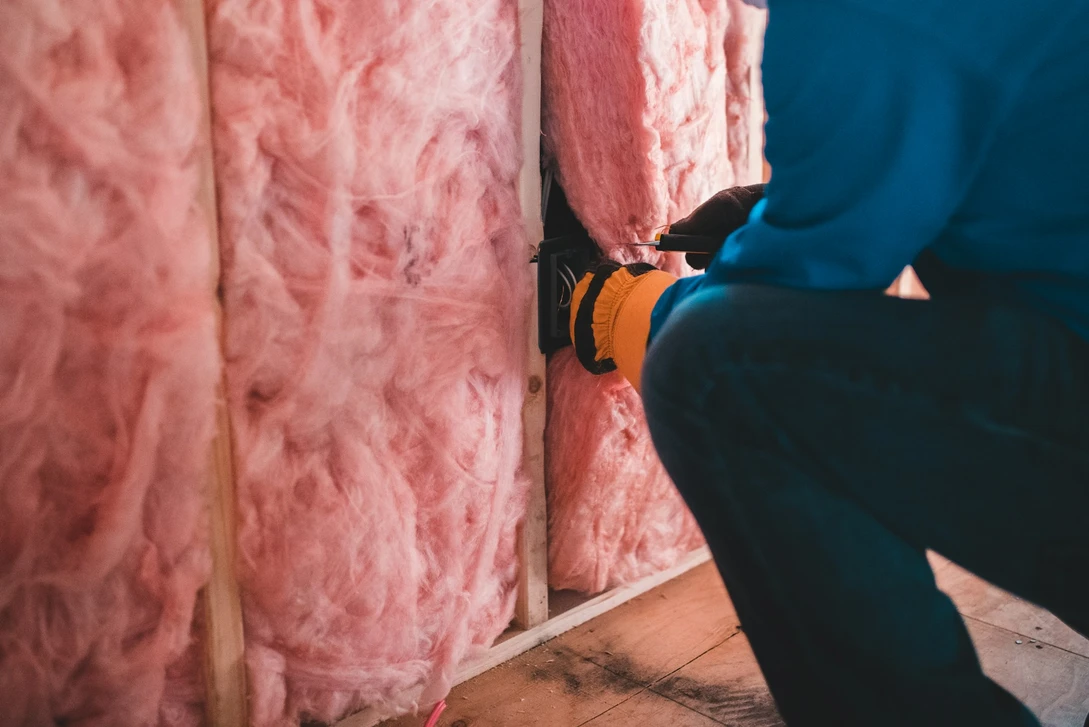
The homeowner has signed for closed-cell on the roof deck, the rig is booked for Thursday, and there are twelve inches of old blown cellulose sitting on the attic floor. Somebody has to decide what happens to it before the gun comes out.
So, do you need to remove insulation before spray foam? Usually yes, and the reason depends on where the foam is going. If you are spraying the attic floor, the old material is physically in the way. If you are spraying the roof deck to create an unvented attic, the old floor insulation is in the wrong place once the job is done. The only time it can reliably stay is when the foam goes somewhere it never touches, and the material is clean, dry and part of the plan.
Floor foam: the old insulation sits right where you need to spray
When the attic stays vented and you are foaming the attic floor (sealing the ceiling plane, top plates and penetrations from above), the foam has to bond to drywall, framing and the gaps between them. Loose fill and batts cover every one of those surfaces. You can't spray through them, and you can't do a proper job by scooping small holes here and there across a whole floor.
This is the cleanest decision on the list, and the Department of Energy's Building America Solution Center spells it out in its guide to spray foam applied to an existing attic floor: the existing insulation must be removed to give access to the ceiling plane, and old insulation, dust and bits of plaster interfere with foam adhesion. The same guide warns against trying to encapsulate any significant amount of debris in foam. So clear the floor, vacuum the dust off the drywall and plates, then spray. If the plan is to foam-seal the floor and blow fresh loose fill over it afterward, the old material still comes out first.
Roof deck foam: the floor insulation becomes a liability
An unvented conversion moves the thermal boundary from the attic floor up to the roofline. Once that happens, the attic is meant to be part of the conditioned space. Insulation left on the attic floor now sits between the house and a space you are trying to keep near indoor temperature, so the attic runs colder than the design assumes and the new assembly can't do its job. DOE's Building America checklist for converting a vented attic to an unvented one tells the contractor to remove the attic floor insulation to minimize wintertime condensation risk, and to pull out any vapor retarder on the attic floor so the assembly can dry. That is the point to make when a homeowner asks why they are paying for removal on a foam job.
The Building America guide to below-deck spray foam on existing roofs adds two prep points every foam crew will recognize: inspect the roof covering and make repairs before you spray, and make sure the decking is dry and free of debris and dust so the foam adheres. Clearing the floor first also gives the crew safe footing on the joists and room to reach the eaves, where leak stains and soft sheathing tend to show up.
Code details on these assemblies (vapor retarder class, ignition or thermal barriers, required R-values) depend on your climate zone and on what your jurisdiction has adopted. Settle them with the designer or the building department before removal day, not on foam day.
When old insulation can stay on a foam job
There are honest cases for leaving material in place:
- Foam is going into a defined zone, such as a knee wall, a rim joist or a section of roof deck over a bonus room, and the insulation elsewhere is outside the spray area and staying in a vented attic.
- The existing material is dry, clean, free of droppings and mold, and the assembly design actually counts on it.
- Nothing underneath it needs inspection, repair or electrical work.
If any of those conditions fails, it comes out. Wet, moldy or rodent-contaminated insulation should never be buried behind a new assembly, and the moisture or entry point that caused it has to be fixed first. In older homes, check for vermiculite before anyone touches the floor. A foam job doesn't change the rule on that material: vermiculite can carry asbestos, no removal bag sold today (ours among them) has a HEPA rating, and the attic belongs to a licensed abatement contractor until it has been tested and dealt with.
Run removal so the spray crew isn't standing around
Removal on a foam job is a scheduling problem as much as a cleanup problem. The spray crew wants a clear, dry, swept attic on the morning they arrive, and every hour of bag changes and haul trips the day before puts that at risk. A sequence that works:
- Confirm where the foam goes and what is coming out, then write that into the scope.
- Protect the house, set the vacuum outside and run hose up through the attic access or a gable vent.
- Pull batts by hand first, then vacuum the loose fill, starting at the far end of the attic and moving back toward the hatch.
- Inspect the deck, framing and penetrations once they are exposed, and finish any roof, electrical or HVAC work.
- Vacuum the remaining dust off the surfaces the foam will touch and check they are dry.
- Hand over to the spray crew.
On a full attic floor, the volume adds up fast, and small bags mean a lot of trips down a ladder. This is where trailer and dumpster bags earn their keep. Our PRO-20 YARD trailer bag lines a 10 or 14 foot dump trailer bed, holds 540 cubic feet and has four inlets, so you can run two vacuums into it at once. The trailer fills in place, nobody carries a bag, and the load goes straight to disposal when the attic is clear. For bigger commercial roofs, the 30 yard dumpster bag does the same job at 840 cubic feet.
On the machine side, a RAMVAC-23 insulation vacuum can pull into bags or straight into a trailer, and its steel fan and chamber handle the damp, heavy material you sometimes find under a leaking roof. To size the bag order before you quote, our free bag calculator takes the attic dimensions, depth, insulation type and condition and gives you a count for each bag model.
Put removal in the foam quote, not in a change order
Crews that price removal as a line item on the foam quote tend to have fewer arguments on site. The homeowner sees one scope, one schedule and a clear reason for each step. Spell out the insulation type, the area being cleared, how the material leaves the property and who handles cleanup. Then state what happens if removal uncovers something: wet sheathing, rodent contamination, active wiring that needs an electrician. Make the spray date conditional on a clean, dry substrate, so a discovery delays the foam instead of being foamed over.
Get the removal side sorted before foam day
If you are adding unvented conversions to your work, the removal half of the job deserves the same planning as the spray half. We supply trailer and dumpster bags, standard removal bags and RAMVAC vacuums to foam contractors across the country, with free same-day shipping. Ring 404-354-6268 at any hour; a real person answers, and we'll help you match bags and a machine to the jobs you are booking.
Frequently Asked Questions
Can you spray foam directly over old fiberglass or cellulose?
Not if you want it to bond and perform. Spray foam needs a clean, dry, solid substrate, and loose fill or batts give it neither a surface to grip nor a way to reach the gaps it is meant to seal. Foaming over old insulation also hides whatever condition the attic was in underneath.
What happens if you leave attic floor insulation in an unvented attic?
The insulation ends up on the wrong side of the new thermal boundary. The attic is supposed to run close to indoor conditions, and a layer of floor insulation partly isolates it from the house, which DOE's Building America guidance links to wintertime condensation risk. That's why the conversion checklist calls for removing it.
Should the same crew handle removal and spray foam?
It often works better that way, because one crew controls the handoff and the schedule. If you subcontract removal, agree in writing on how clean the substrate must be, who vacuums the final dust, and who inspects the deck before the spray crew arrives.
How soon after removal can spray foam go on?
As soon as the surfaces are clean, dry and repaired, which can be the next day on a straightforward attic. If removal reveals a roof leak or damp sheathing, the foam waits until the leak is fixed and the wood has dried, and checking deck moisture before spraying is part of the DOE guidance.
Do I need a bigger vacuum for unvented conversion jobs?
Not necessarily bigger, but you need one that keeps pulling across a full attic floor without constant stops. Gas machines suit most residential conversions. A diesel unit such as the RAMVAC-40D makes sense if you are clearing large commercial roofs regularly or running long hose to the work area.