
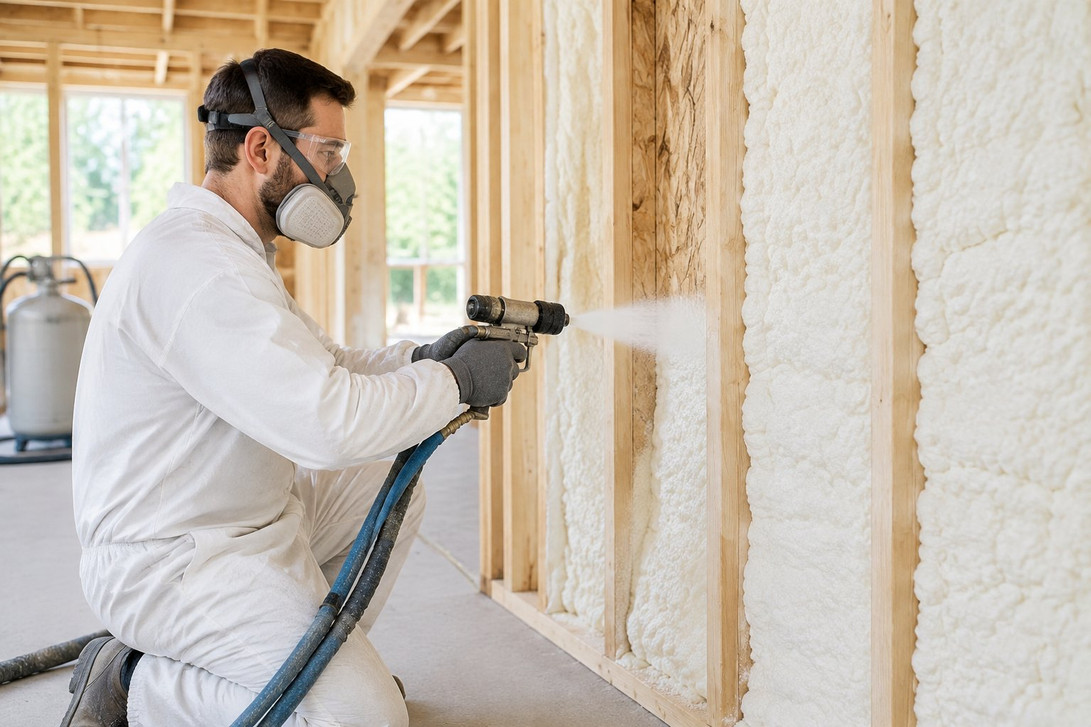
Anyone who has priced a spray foam tear-out knows the first surprise: there's no vacuum shortcut. Blown fiberglass and cellulose can be pulled out of an attic in an afternoon with a removal vacuum. Cured spray foam is glued to the roof deck, the rafters and everything else it touched, and it has to be cut off.
So spray foam insulation removal is a mechanical job. You cut the bulk away in blocks, scrape or grind the thin layer left bonded to the wood, hand-collect the pieces, and bag them for disposal. It's slow, it's dusty, and the protective gear matters a great deal. It's also sometimes unavoidable, which is why spray foam contractors end up doing it.
When foam actually needs to come out
Sound, dry, well-bonded foam is usually best left alone. Removal is disruptive, it can damage the framing, and it leaves you with an expensive rebuild. The jobs that genuinely call for it tend to fall into a few groups:
- Off-ratio or poorly cured foam. Foam that stays tacky, crumbles, has large voids or pulls away from the substrate isn't doing its job as insulation or an air seal.
- Persistent odor complaints. A smell that hangs on well after installation, especially combined with soft or sticky foam, needs a proper assessment. Odor alone doesn't tell you how much has to come out, so have the installation evaluated before cutting.
- Hidden moisture or rot. Foam on a roof deck can hide a leak for a long time. If there are signs of wet or deteriorating sheathing, the foam over it has to come off so the deck can be inspected and repaired.
- Access for repairs. Roof deck replacement, structural repair, rewiring or plumbing work behind foam all mean cutting it back.
- Pest damage. Rodents and insects can tunnel through foam, and the damaged sections usually come out.
If the foam is still uncured (wet, sticky or freshly sprayed), stop and contact the installer or the foam manufacturer before anyone cuts it. Uncured foam is a different hazard from cured foam, and its handling should follow the product's safety data sheet.
Open cell and closed cell come off very differently
Open-cell foam is soft, light and spongy. It cuts easily with a long blade and pulls away from wood in big pieces, so bulk removal goes quickly. It also crumbles, which means lots of small fragments and dust on the floor.
Closed-cell foam is rigid, dense and bonds tenaciously to wood and metal. You can cut it into blocks, but a thin layer tends to stay stuck to the substrate, and that residue is where the hours go. It's also the foam most often sprayed against roof decks, so you're cutting overhead.
Know which one you're dealing with before quoting. A closed-cell roof deck job takes far longer than the same square footage of open cell.
The tools for the job, in order of use
There's no single foam removal tool. Crews tend to work through a sequence:
- Long-bladed saws and knives for the bulk. A reciprocating saw or an oscillating tool fitted with a long, fine-toothed or knife-edge blade slices foam out of rafter and stud bays in blocks. A long serrated hand knife does the same thing more slowly with more control.
- Scrapers and chisels for what's left. Flat scrapers and wide chisels take off the layer that the saw couldn't reach without gouging wood.
- Wire brushes and abrasive tools for stubborn residue, used only where the substrate needs to be bare and only with dust controls in place. Grinding foam makes a lot of fine dust, and it eats into wood as readily as foam.
- Specialist methods. Some specialist crews use blasting media to strip foam residue from large surfaces. That's a job for people with the equipment and containment for it.
Never use heat. Torches and heat guns have no place in foam removal; you're standing in a wood-framed attic next to a combustible material.
Why foam removal takes so long
Customers are often surprised by how many labor hours a foam tear-out needs. The reasons are worth explaining to them:
- It's cut, not pulled. Every block has to be sliced free on several sides.
- The bond is strong. Closed cell residue comes off in small bites.
- The work is overhead. Roof deck foam means cutting above your head on a ladder or in a cramped attic, which is slow and tiring.
- The substrate needs protecting. Cut too deep and you're repairing rafters and sheathing as well. Roofing nails coming through the deck add another hazard to cut around.
- Hidden services. Wiring, plumbing and ductwork are often encased in foam and have to be found and cut around by hand.
- Cleanup is continuous. Foam fragments build up fast and have to be cleared so the crew can see what they're cutting.
PPE: dress for dust and fragments
Cutting, scraping and especially grinding cured foam throws off particles and fine dust. Set up the job with a written hazard assessment, check the foam manufacturer's safety data sheet, and choose respiratory protection to match. That means a properly selected, fit-tested respirator under a respiratory protection program, never a loose dust mask.
From the neck down, a disposable coverall with a hood keeps foam dust out of hair and clothing and gets thrown away at the end of the shift instead of going home in the truck. For foam cutting we'd pick our Microvek Heavy Duty coveralls. The microporous fabric keeps fine dust out, the anti-static coating on both sides means foam crumbs don't cling to you the way they do to ordinary fabric, and the two-way zipper lets you vent a little without taking the suit off. For hot attics where breathability matters more, there's the full range of disposable coveralls, sold in packs of 50. Add sealed eye protection and cut-resistant gloves; long blades and foam with roofing nails in it are hard on hands.
Contain the work area as you would any dusty tear-out: plastic over doorways, HVAC off and registers sealed, and a clean area at the containment exit to take off coveralls.
Foam debris isn't vacuumed like loose fill
This is where expectations need to be accurate. An insulation removal vacuum is built to move loose material through a hose. Cut foam comes off in slabs, blocks and chunks, and those will jam a hose immediately. Foam debris is collected by hand.
What a removal vacuum is good for on a foam job is everything around the foam. Plenty of attics have loose-fill fiberglass or cellulose sitting on the attic floor that needs to come out before or after the foam work, and that goes through the vacuum as normal. Small, crumbly open-cell fragments left on the floor at the end can usually be vacuumed up as well, as long as the larger pieces have been picked out first.
Bagging and hauling the debris
Foam is light for its bulk, so volume is the limit, not weight. Hand-load the chunks straight into bags as you cut, rather than letting them pile up on the attic floor.
Our insulation vacuum bags work well for hand-loaded foam debris and for the loose fill a vacuum pulls out on the same job, and they're far tougher than trash bags against sharp foam edges and nails. Where filled bags have to come down through a tight attic hatch, the PRO-200 small bags are the practical choice: open-cell offcuts fill one quickly, and it still slides through a 22 inch hatch. On larger jobs, lining the dump trailer or roll-off with a trailer or dumpster bag keeps foam fragments from blowing out of the load on the road. Check with your local disposal facility on how they want foam waste delivered.
Foam was sometimes sprayed straight over whatever was already in the attic, so watch for vermiculite underneath as the blocks come away. If those gray-brown or gold pebbles appear, stop cutting: vermiculite may contain asbestos, our bags aren't HEPA rated (no removal bag is), and the material needs testing and, if positive, a licensed abatement contractor.
Before the new insulation goes in
With the foam gone, inspect everything it was covering: the deck for stains, soft spots and nail leaks, the rafters for rot and cut damage, and any wiring or plumbing that was encased. Fix the cause of whatever prompted removal before anything new goes on, and let wet wood dry. Scrape off loose residue so a new application bonds properly.
Kit out the crew before the first cut
Foam removal burns through coveralls and bags faster than most jobs, so stock up before you start. Microvek suits for the dustiest cutting, our insulation vacuum bags for hand-loaded debris and a trailer bag for the haul cover most foam jobs. Every RAM order ships free the day you place it, and if you want a hand sizing up a foam tear-out, ring 404-354-6268 at whatever hour suits you.
Frequently Asked Questions
Is it possible to remove only part of a spray foam job?
Yes, and it's often the better answer. If a defect, leak or repair is confined to one area, cut back to sound, well-bonded foam around it and patch with new foam, rather than stripping the whole attic.
Does foam removal damage the roof deck?
It can, which is why the last layer comes off with scrapers rather than aggressive cutting. Expect some surface scoring on closed-cell jobs. Deep gouges and nail damage should be repaired before reinsulating.
Can old foam be removed and the attic left uninsulated for a while?
Short term, yes, as long as the house can tolerate the temperature swing. Many removal jobs are followed straight away by reinsulation because the inspection and repairs are done while the framing is bare.
Is open-cell foam easier for a DIYer to remove?
Open cell is far more forgiving: it cuts with a long knife and pulls away in large pieces. Closed-cell roof deck foam is a hard, slow job even for experienced crews, and most homeowners are better off hiring it out.
Can I reuse foam that I've cut out?
No. Cut foam has lost its seal and its shape. It goes in the bag and off to disposal.