
It's one of the most common plans we hear on the phone: there's a shop vac in the garage, a few hundred square feet of old blown-in insulation upstairs, and a free Saturday, and all the caller needs from us is the right bags to go with it.
Our straight answer on using a shop vac for insulation removal: it's fine for a small cleanup and the wrong tool for an attic. A shop vac will pick up a bucket's worth of fluff around a hatch or a repair. It will not clear an attic floor without turning one weekend into three, and it has a habit of blowing the dust right back into the house.
The numbers explain why a canister can't keep up
Loose-fill insulation takes up an enormous amount of space for what it weighs. Picture a 1,000 square foot attic covered a foot deep. You're looking at a thousand cubic feet of fluff, or roughly 7,500 gallons.
A big shop vac has a 16 gallon drum. Even if the filter stayed perfectly clean (it won't), you'd be stopping to empty it something like 470 times. Every one of those stops means opening the drum, which puts a puff of fiberglass or cellulose dust back into the air, and carrying the load somewhere.
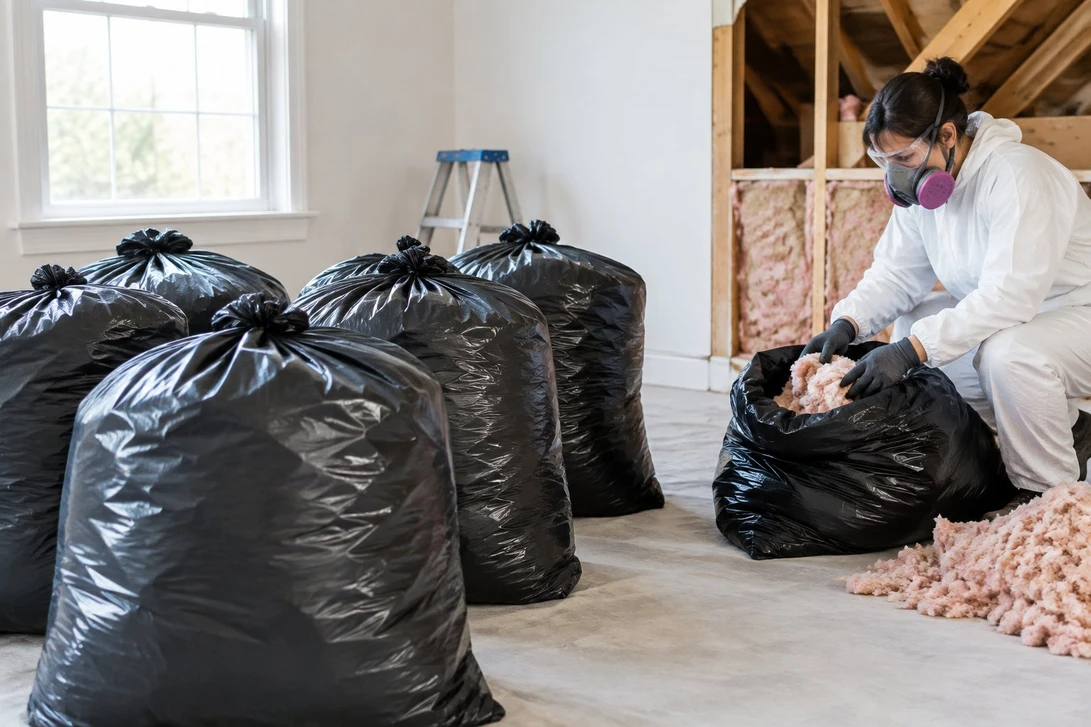
A removal vacuum works on a different principle. It doesn't store anything. The machine sits outside, pulls insulation through a large hose, passes it through the fan and blows it into a filter bag on the ground. Each of our standard 75 cubic foot bags swallows roughly a 75 square foot patch of foot-deep insulation. When one is full, you tie it off and clip on the next one, and the machine never stops to be emptied.
Where a shop vac fails on attic work
The filter clogs before the drum fills
Cellulose in particular is mostly fine paper dust, and old fiberglass sheds plenty of its own. That dust coats the shop vac's pleated filter within minutes. Suction drops, the motor works harder and runs hotter, and you end up stopping to knock the filter clean every few minutes. Pulling the filter out to keep the suction up just sends the dust through the motor and straight out of the exhaust into the house.
The hose is the wrong size for the material
A shop vac hose is usually somewhere between 1¼ and 2½ inches across. Insulation comes up in clumps, especially old cellulose that has settled and crusted, and those clumps bridge across a narrow hose and plug it. Removal machines run hose several times wider, and our RAMVAC machines take an 8 inch hose, which lets compacted material, the odd wood chip and rodent nesting pass through without stopping the job.
The machine ends up in the wrong place
A shop vac has to sit near you, which means it's either in the attic with you on a wobbly board between joists, or on the landing below the hatch blowing filtered air (and whatever got past the filter) around the hallway. You also need power within reach, which usually means an extension cord running up a ladder. A removal vacuum stays outdoors with only the hose coming into the house, so the noise, the exhaust and the full bags all stay outside.
What a shop vac is genuinely good for
We'd never tell you to leave it in the garage. On a removal job it earns its keep at the edges:
- Picking up the last of the fluff from between joists after the bulk has been vacuumed out.
- Cleaning the hatch frame, the ladder and the floor below the hatch once the job is done.
- Small, clean spills, like a few square feet disturbed during a wiring or ceiling repair.
- Vacuuming dust off the top plates and drywall before new insulation goes in.
Keep the filter in, use a fine-dust filter or bag if your model takes one, and empty the drum outside.
Stop before you vacuum anything that's contaminated
Two situations where no vacuum belongs in the plan until someone has looked at the attic properly.
Rodent droppings and nests. The CDC is blunt about this one. Its rodent cleanup instructions tell you not to vacuum or sweep urine, droppings or nests at all, since that can send tiny virus-carrying droplets into the air you're breathing. It recommends wetting droppings with a bleach solution or an EPA-registered disinfectant first, and it calls for special precautions on heavy infestations. An attic with widespread droppings is a job for a wildlife or attic restoration professional, and a shop vac with its exhaust blowing into your house is about the worst tool you could pick for it.
Vermiculite or anything that might contain asbestos. Vermiculite is granular, more like shiny gravel than fluff. If you see it, stop and have it tested. A shop vac is no answer here, and neither is a removal machine: not one insulation vacuum bag sold today, RAM's included, carries a HEPA rating. Our post on why asbestos insulation shouldn't be vacuumed covers what to do next, which is a licensed abatement contractor.
What the DIY version of a proper setup looks like
If the attic is clean, dry and free of vermiculite, a DIY removal is very doable with the right gear. Many homeowners, flippers and landlords borrow or rent a gas-powered removal vacuum for the day and supply their own bags.
Our bags fit all insulation vacuums, with a spout that takes hoses up to 10 inches. For a typical DIY attic, a pack of heavy-duty insulation vacuum bags in the 75 cubic foot size is the usual pick. If you can't get the hose to part of the attic, or you'd rather carry smaller loads down a ladder, our PRO-200 small bags are made for exactly that: they pass through a 22 inch hatch and top out around 250 pounds.
A few setup habits make the day go smoothly:
- Put the machine outside and run the hose in through the hatch or a gable vent.
- Never clamp the bag straight onto the machine. A run of hose in between lets nails and debris slow down before they reach the fabric.
- Begin in the corner farthest from the hatch so you finish at your exit.
- Stop each bag at about 85 percent full so it closes cleanly.
- Wear disposable coveralls to keep the itch off your clothes, plus a properly fitted respirator, goggles and gloves.
Then let the shop vac do the final tidy.
Count your bags before you start
Running out of bags halfway through is the one mistake that's harder to fix than a clogged shop vac. Our free bag calculator works out how many you need from the attic size, depth and insulation type, and we suggest adding 10 to 15 percent on top. Shipping is free and goes out the same day you order. If you'd like a second opinion on the attic first, ring 404-354-6268; somebody here picks up around the clock.
Frequently Asked Questions
Can a shop vac remove blown-in insulation from a wall cavity?
Only a little, from the top of an opened cavity. Settled cellulose packs tightly inside walls and will plug a narrow hose almost immediately. For anything more than a single bay, a removal vacuum with a wide hose and a few holes cut along the cavity is faster and much cleaner.
Will vacuuming insulation damage my shop vac?
It can. Fine dust blinds the filter, the motor runs hot trying to pull air through it, and dust that gets past the filter ends up in the motor. If you use one for insulation cleanup, keep the sessions short and clean or replace the filter afterwards.
Can I attach an insulation vacuum bag to a shop vac?
Not usefully. Our bags are built for the exhaust of a removal vacuum, where a steady blast of air and insulation inflates the bag and the fabric filters it. A shop vac's small exhaust port and modest airflow won't fill a large filter bag, and you'd still be limited by the shop vac's hose and filter on the intake side.
Is it safe to use a shop vac on old fiberglass insulation?
For a small, dry, uncontaminated amount, yes, with a respirator, eye protection and long sleeves. The bigger risk is the exhaust, which blows fine fibers around the room if the filter is poor or missing. Empty the drum outdoors and wipe down surfaces afterwards.
How long does a DIY attic removal take with a proper machine?
It depends on the attic size, depth, access and how many people are helping. What changes with a removal vacuum is that the work never stops for emptying: one person works the hose while a helper outside swaps bags, so the pace is set by how fast you can move through the attic rather than by the size of a drum.