
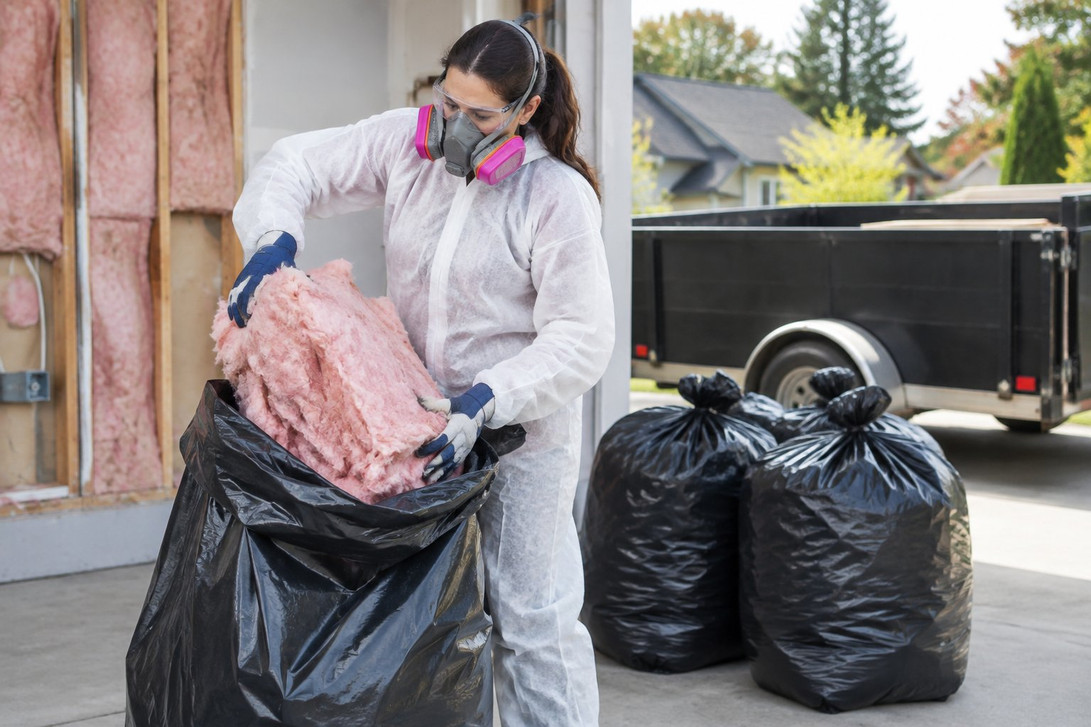
Getting the old insulation out of the attic is the part everyone plans for. Getting rid of it is the part that catches people out, usually at the gate of a transfer station that won't take loose fiberglass or wants to know what's in the bags before they tip.
Here's how to dispose of insulation without a wasted trip. In most of the US, clean fiberglass, cellulose and rock wool from a removal job go out as ordinary construction and demolition debris, bagged and taken to a landfill or transfer station that accepts it. The details vary by state, county and individual facility, so the most useful thing you can do is call ahead. The exceptions are contaminated material, which needs a conversation first, and anything that might contain asbestos, which follows a separate route entirely.
Clean insulation is construction debris almost everywhere
Old insulation from a removal job falls in with the rest of construction and renovation waste. According to the EPA's page on construction and demolition landfills, solid waste disposal is overseen by the states, and some states set stricter requirements than the federal minimum. In practice that means the facility down the road may have different rules from the one in the next county.
Your options usually come down to three:
- A construction and demolition (C&D) landfill, which takes renovation and demolition waste and is often the cheapest home for large loads.
- A transfer station, where loads are dropped, consolidated and trucked on to a landfill. Convenient for contractors and DIYers, but they can be strict about packaging.
- Curbside or bulk trash pickup, for a homeowner with a few bags. Many municipalities limit how much renovation waste they'll collect, and some won't take it at all.
Ask these questions before you load the truck
One phone call to the facility saves more trouble than anything else you'll do on the job. Ask:
- Do you accept insulation, and which types (fiberglass, cellulose, rock wool, spray foam)?
- Does it have to be bagged, and do you have rules about the bag? Some sites want every bag closed, some want clear bags so they can see inside, and a few want loose material only.
- Can I tip a lined trailer or dumpster with the bag inside, or do bags have to come off by hand?
- Are contractor loads handled differently from household loads?
- What do you need to know about contaminated material from rodent, mold or fire jobs, and do you take it at all?
For contractors, keep the weigh ticket or receipt for every load. It's your record that the material went somewhere legitimate, and clients and insurers on restoration jobs often ask for it.
Bag it so it leaves the site sealed
Loose insulation blows out of trucks, sheds fiber across the tipping floor and irritates everyone who handles it, which is why most facilities want it contained. If the job was vacuumed, the insulation vacuum bag is the disposal bag: close it fully, and it goes to the landfill with the insulation inside. If you pulled batts by hand, heavy contractor bags or a larger woven bag do the same job.
A few habits make the trip easier:
- Fill vacuum bags to about 85 percent (75 percent for rock wool) so they close cleanly. An overstuffed bag splits when it's thrown onto a pile.
- Close bags on the job, not at the gate.
- Keep bags off sharp debris on the truck. A puncture on the highway leaves a trail of fiberglass behind you.
- Haul promptly. Polypropylene breaks down under UV, so bags left in the sun for weeks get brittle.
You can find every standard size on our insulation vacuum bags page.
Big jobs go out in one bag, not fifty
On a large attic, the disposal problem is less about rules and more about trips. Dozens of 75 cubic foot bags have to be carried, loaded, strapped down and unloaded again at the facility. Our trailer and dumpster bags remove most of that work: the bag lines a dump trailer or roll-off, the vacuum fills it in place, and the whole load is closed and hauled as one. Sizes run from 320 to 840 cubic feet.
Before you book a roll-off for insulation, tell the hauler what will be in it and ask about the weight allowance. Insulation is light and bulky when dry, but a load of soaked cellulose can blow through the container's weight allowance while there's still plenty of headroom above it.
Contaminated insulation needs a phone call first
Rodent droppings and urine, mold growth, soot and smoke residue all change what the facility will want from you. Most will still take it, but some want it described separately, double-bagged, or delivered at a particular time. Don't mix contaminated insulation into a clean load without asking.
On the job itself, contaminated material should go into your toughest, least dusty bag. The RAM PRO-450 Super Duty has the highest filtration in our range and a 450 pound rating, which suits damp, heavy and dirty loads. Crews on rodent, mold and fire jobs also go through a lot of protective clothing; our microporous Microvek coveralls are made for those dirty attics, and the used suits normally go into the bags with the rest of the job waste. Follow CDC guidance for rodent cleanup and EPA guidance for mold on the protective side, and bring in a remediation specialist where those agencies recommend it.
Asbestos and vermiculite take a different route entirely
If the attic has gray-brown, pebbly vermiculite or any insulation you suspect contains asbestos, stop. None of the disposal routes above apply. The EPA's guidance on asbestos-contaminated vermiculite insulation is to assume the vermiculite contains asbestos, leave it undisturbed, not try to remove it yourself and hire a professional asbestos contractor for any work that would disturb it.
That rules out removal bags too. Ours aren't HEPA rated, and neither is any other insulation vacuum bag sold, so asbestos waste is packaged and disposed of by a licensed abatement contractor under the rules your state applies. We cover why in more detail in is asbestos insulation safe to vacuum?
Recycling removed insulation is rare
Clean, dry, intact fiberglass batts sometimes find a second life with a building materials reuse store or another project, especially if they still have their facing and haven't been compressed. Removed loose fill is a different story. Once it has been vacuumed out of an attic, it's mixed with dust and debris, and recycling outlets for it are hard to find. Ask your local solid waste department whether anything exists in your area, and plan on disposal if not.
Line the trailer before the first bag fills
If disposal is the slow part of your jobs, a trailer or dumpster bag usually fixes it. Tell us the inside dimensions of your trailer or roll-off on 404-354-6268 (any hour, it's our own phone) and we'll match a bag to it. Shipping is free and goes out the same day.
Frequently Asked Questions
Is fiberglass insulation classed as hazardous waste?
Clean fiberglass from a home is normally handled as ordinary construction debris rather than hazardous waste. Your state and the facility decide the details, though, and contamination or suspected asbestos changes the picture, so describe the material accurately when you call.
Can I burn old cellulose or batt insulation?
No. Burning building waste is banned or restricted in many areas, and insulation facings, adhesives and the fire retardants in cellulose don't belong in a burn pile. Bag it and haul it.
Can I leave filled insulation bags out for regular trash pickup?
Sometimes, for a few bags from a small homeowner job. Many municipalities cap the amount of renovation waste they collect, or require a bulk pickup appointment, so check with your local waste service first.
How do I dispose of old spray foam?
Cured spray foam scraped or cut out of a building is usually accepted as construction debris, but rules vary. Call the facility, describe it, and ask whether it can go in with other insulation or needs separating.
Do I need a special permit to haul insulation to the landfill?
Most homeowners and contractors don't need one for ordinary insulation, but some areas require waste haulers to be registered, and roll-off containers on public streets often need a permit. Your city or county can tell you what applies.