
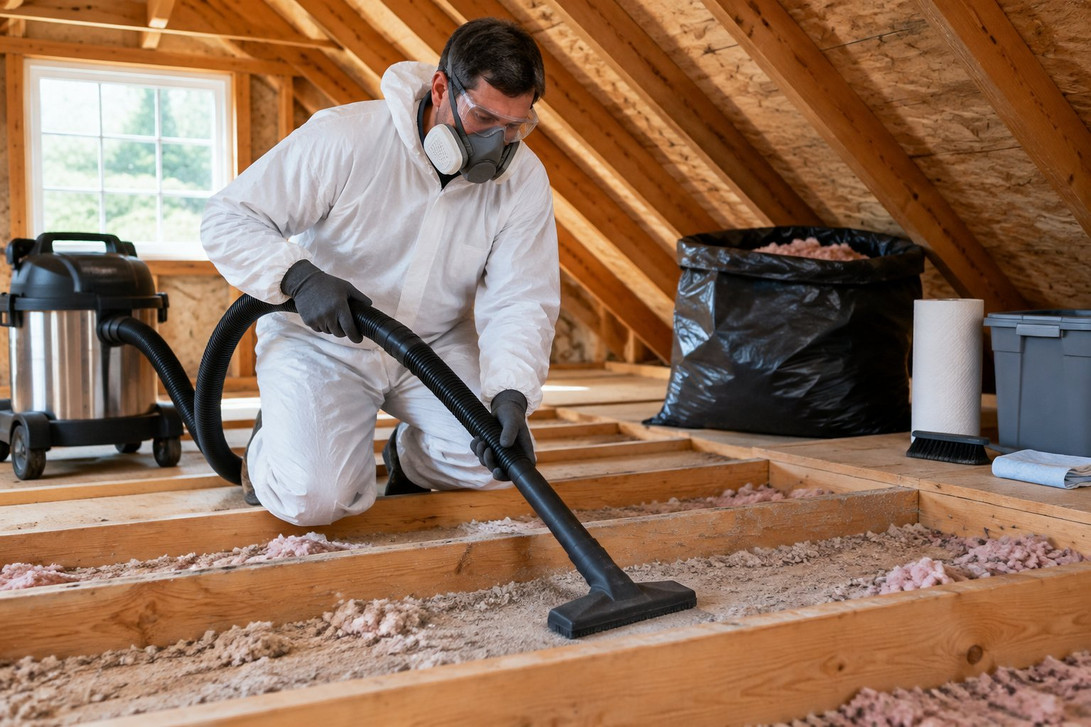
Never sweep it, never blow it and never run a household vacuum through it. That's most of what you need to know about how to clean up insulation once the removal is done. Brooms and leaf blowers throw fine fibers back into the air, and a regular vacuum blows the finest dust straight out of its exhaust and into the next room.
What works is the reverse: pick up the bulk with the removal vacuum while it's still on site, take the fine dust with a HEPA-filtered vacuum, then damp-wipe what's left. Work from the top of the house down and from the dirtiest area toward the cleanest, and save your own clothes and skin for last.
Finish the attic before the machine leaves
The cheapest cleanup is the one the removal vacuum does for you. Before you roll up the hose, make a final slow pass along every joist bay with the nozzle close to the drywall, starting at the eaves farthest from the hatch so you finish where you climb out. Pay attention to the spots that hold fluff: tight against the top plates at the eaves, around ceiling boxes and recessed light housings, under ductwork and in the corners where the roof pitch gets low.
This last pass is usually fine dust and stray clumps rather than bulk insulation, which is exactly the material that clogs a weaker bag and puffs out of the fabric. We'd put this stage into a PRO-450 Super Duty bag, which filters the finest material of anything we sell and lets the least dust through. As with every bag, stop filling at about 85 percent so you can close it without squeezing dust out of the spout.
Then deal with what the vacuum can't. Pick up nails, staples and wood scraps by hand, look over the attic floor with a good light and check that nothing is left on top of ducts or wiring. If the final pass turns up pebbly vermiculite or anything else that could contain asbestos, put the hose down. Removal bags, RAM's included, are not HEPA rated and can't contain asbestos fibers, so that material needs a lab test and, if it's positive, a licensed abatement crew.
Rooms below: HEPA vacuum first, damp wipe second
Even on a well-contained job, some dust finds its way down through the hatch, the recessed lights and gaps around fixtures. Clean in this order:
- Start high. Light fixtures, ceiling fan blades, door frames and the tops of cabinets near the hatch. Anything you knock loose lands on surfaces you haven't cleaned yet.
- HEPA vacuum the settled dust. Use a vacuum with a true HEPA filter and move slowly. Brush and crevice tools get into trim, window tracks and the carpet edge along the walls, where fibers collect.
- Damp wipe hard surfaces. A lightly damp microfiber cloth traps fibers instead of pushing them around. Fold it to a clean face often and rinse or swap cloths as they load up. Dry dusting just relaunches the finest particles.
- Do a second pass where it matters. Under the hatch, along the crew's route and anywhere you can still see a film when you shine a flashlight across the surface at a low angle.
Carpet near the hatch needs several slow HEPA passes in different directions. Upholstery and curtains can be vacuumed with an upholstery tool, but a soft item that's heavily dusted is often easier to launder or have professionally cleaned. Close the doors to rooms you've finished so dust from the next room doesn't drift back in.
Check the HVAC before you turn it back on
If the system stayed off during removal (it should have), there's one more step before you switch it back on. Remove any covers from supply registers and returns and vacuum each grille and the first few inches of duct you can reach. Replace the system filter, because the old one will have collected whatever dust reached the returns, and a fresh filter catches the stragglers once the air starts moving.
If the air handler or ducts sit in the attic, look them over closely. Check that no duct joints were knocked loose or torn during removal and that no insulation got into an open return or a disconnected run. When you can see dust inside the duct beyond the register, recommend a duct inspection before the homeowner runs the system for any length of time.
Clean the equipment where it stands
Tools and hose carry a surprising amount of fiber, and the van is the last place you want it. With your gloves and respirator still on:
- Shake nothing. Vacuum the outside of the hose, nozzles and hand tools with the HEPA vacuum or wipe them with a damp disposable cloth.
- Close and tie off every filled bag before it moves, and stage the bags away from doors and windows until they're loaded.
- Clean the vacuum's exterior and inlet according to its maintenance instructions before it goes back on the trailer.
- Pull up drop cloths and floor runners by folding them inward on themselves, dirty side in, so the dust stays trapped in the fold.
Disposal rules for insulation vary from place to place, so check with your local landfill or hauler before the first load. Insulation pulled from rodent, mold or smoke-damaged attics can come with extra requirements.
Fiberglass on skin, eyes and clothes
The Agency for Toxic Substances and Disease Registry's fact sheet on synthetic vitreous fibers notes that airborne fibers can irritate the eyes, nose, throat and lungs, that skin contact can cause irritation, and that these effects usually clear up shortly after exposure stops. The goal is to keep the fibers from riding home with you.
Coming out of the suit. Peel disposable coveralls off slowly, rolling them down and inside out so the dirty outer surface ends up inside the bundle, and put them straight into a trash bag. Remove gloves last, without touching your skin. A hooded suit with elastic wrists and ankles, such as those on our disposable coveralls page, keeps most of the fiber off your clothes in the first place.
Skin. Rinse rather than scrub. Rubbing and scratching tends to push fibers further into the skin and makes the itch worse. Wash with mild soap and running water, then pat dry. Visible fibers can often be lifted off with a piece of tape pressed gently against the skin and pulled away.
Eyes. Don't rub them. Flush with clean water, and get medical attention if irritation doesn't settle.
Clothes. The same ATSDR fact sheet advises showering and changing before going home, keeping work clothes separate from other clothes and laundering them separately. Wash them on their own, then run an empty rinse cycle so stray fibers don't end up in the family's next load.
Get the bags and suits ready for the cleanup pass
A clean finish starts with gear that keeps dust in the bag and off your crew. We stock the full range of insulation vacuum bags plus disposable coveralls in packs of 50, all shipped free on the day you order. For help matching a bag to the material you're pulling, call RAM at 404-354-6268, day or night. For the removal itself, our guide to removing fiberglass insulation covers the job from the start.
Frequently Asked Questions
Will a household vacuum handle insulation dust?
Not for the main cleanup. Most household vacuums let fine dust escape through the exhaust, and loose insulation clogs their filters and hoses quickly. Use a removal vacuum for any bulk material and a HEPA-filtered unit for whatever fine dust remains.
How long does fiberglass dust stay in the air?
The finest particles can stay suspended for a while after work stops, especially if anything keeps stirring them up. Give the dust time to settle before the final HEPA vacuum and damp wipe, keep the HVAC off until you've cleaned, and keep fans from blowing across surfaces you haven't wiped yet.
Should I wear a respirator during cleanup, or only during removal?
Wear it for cleanup too. Vacuuming, wiping and pulling up floor protection all put fine dust back in the air, and cleanup is often when people let their guard down. Keep the respirator, gloves and eye protection on until the last bag is tied and you're out of the suit.
What if insulation dust got into the ductwork?
Visible dust beyond the registers, or a burst of dust when the system starts, means the ducts need attention before the system runs normally. Leave the system off, replace the filter and have a qualified HVAC or duct cleaning contractor inspect the ducts and clean them if needed.
Do I need to clean differently after removing contaminated insulation?
Yes. Insulation contaminated with rodent droppings, mold or smoke residue brings its own health guidance, and the cleanup often includes disinfecting or deodorizing steps that go beyond dust control. Follow the CDC or EPA guidance for that specific contaminant, and consider a remediation professional for heavy contamination.