
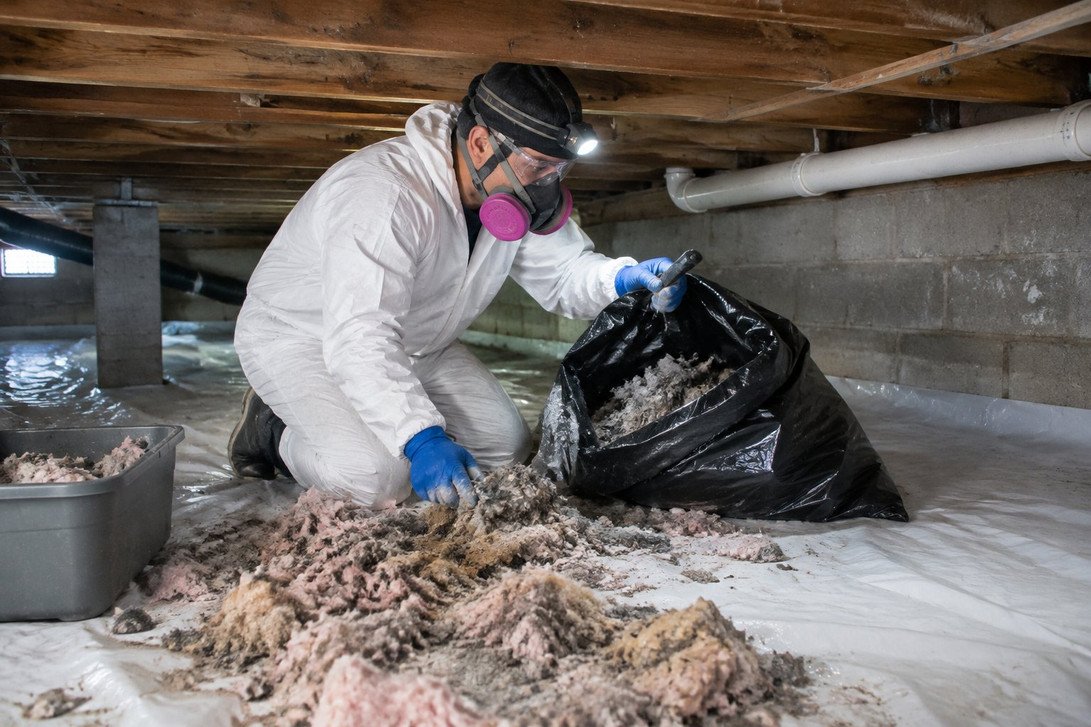
Ask any encapsulation or spray foam crew what slows them down under a house and you'll hear the same list: offcuts of lumber from 1987, a coil of old copper line, three bags of mortar gone solid, a torn sheet of plastic, a carpet of fallen fiberglass and something that used to be a possum. None of it can stay if new work is going in.
A professional crawl space cleanup removes everything that doesn't belong under the floor, deals with any biological contamination safely, and leaves a dry, clear surface the next trade can work on. The skill is less in the cleaning than in the sorting and the order, because rodent waste, sharp debris, old insulation and suspect materials each have to be handled differently.
Sort the crawl space before you touch anything
Do the first pass with a flashlight from the access, then a slow crawl with a notepad or phone camera. You're building a picture of what's there, how much of it and what will need special handling. Photographs taken now also give the homeowner a record of the before state, which helps when you hand over.
Here's how the usual contents break down:
|
What you find |
How it comes out
|
|---|---|
|
Construction leftovers: lumber, block, pipe, wire, cans |
By hand, in sturdy bags or buckets, sharp items kept separate |
|
Fallen or failed insulation |
Batts pulled by hand, loose fiberglass and fines vacuumed |
|
Droppings, urine staining, nests, carcasses |
Wetted with disinfectant first, then bagged by hand, never vacuumed or swept |
|
Old, torn vapor barrier |
Rolled inward from the far end, bagged after the insulation is out |
|
Old pipe wrap, pebble-like vermiculite |
Left alone and tested before anyone disturbs it |
|
Standing water, sewage, live wiring in water |
Stop work and bring in the right trade |
That last row matters. Sewage under a house or water touching wiring changes the job from cleanup to emergency, and it's not something to crawl through. The same goes for joists or sill plates that are soft enough to push a screwdriver into.
Contamination gets handled before the bulk debris
The order of operations is what separates a clean job from one that drags droppings across the entire crawl space. Treat the biological contamination first, while the rest of the space is still undisturbed.
The CDC's instructions for cleaning up after rodents are specific: no sweeping and no vacuuming of rodent waste or nests. Instead, spray them with disinfectant or a fresh solution of 1 part bleach to 9 parts water, and let it soak for 5 minutes (or as the disinfectant label directs) before wiping up and bagging. The same guidance says contaminated insulation should go into plastic bags for removal. For heavy infestations, the CDC lists coveralls, boots, gloves, goggles and a respirator with HEPA filtration.
In practice, that means mapping where the contamination is, treating it, bagging the waste and contaminated material separately, and only then moving on to the rest. A dead animal comes out at this stage too, with the soil underneath it treated and, if it's badly soaked, dug out and bagged.
Suspect materials sit outside the cleanup entirely. Heating pipes in older crawl spaces were sometimes wrapped in asbestos-containing insulation, and the EPA's page on vermiculite insulation says to assume vermiculite contains asbestos and not to disturb it. Mark those areas, keep your crew away from them and recommend testing and licensed abatement. Our bags, like every insulation vacuum bag on the market, are not HEPA rated and must never be used for asbestos.
The bulk debris comes out by hand, sharps first
With the contamination dealt with, start at the far end and work back toward the access in zones. Pick up lumber, block, pipe and metal by hand. Collect nails, screws, broken glass and sheet metal offcuts in a bucket or rigid container rather than throwing them in with soft waste, because a loose nail inside a soft bag is how bags split open while being dragged out.
Fallen insulation is usually the biggest single volume, and on most jobs it's worth treating as its own phase with its own crew member, since batts come down by hand and the fines need the vacuum. Whatever you're collecting, bag as you go and get full bags out to a tarp at the access. A stack of them between you and the only way out is a problem you don't want to discover on your back.
Pull the old vapor barrier last
Once the insulation and debris are out, the old plastic is usually the last thing standing between you and bare soil. Start at the far end, fold the edge back on itself and roll toward the access so the dirt and any remaining fibers end up inside the roll. Cut it into lengths you can drag out without the roll catching on piers.
Then vacuum. A run with the insulation vacuum picks up the leftover fiberglass, loose debris and dry soil crumbs that would otherwise sit under a new ground cover. What you're collecting at this stage is fine and often damp, which is the combination our PRO-450 Super Duty bag was built for: it's our lowest-dust fabric and it's rated to 450 pounds.
Pick the suit for the conditions under that house
Crawl spaces are dirtier than most attics and often wetter, and your crew will be lying in whatever is down there. Disposable coveralls do two jobs: they keep fiberglass and dirt off skin and clothing, and they stop the crawl space coming into the house with you when you step out. Our disposable coveralls come in packs of 50, in two styles:
- Damp, muddy or contaminated crawl spaces: Microvek microporous suits shed light splashes and keep hazardous dust out, and the storm flap over the zipper stops grit working in while you slide along on your front.
- Dry crawl spaces in hot weather: Cool-Suits are breathable three-layer SMS fabric, which makes a long day on your back in the Southern summer a lot more bearable.
Suit up outside, change suits when one tears or gets heavily soiled, and take it off at the access before anyone walks through the house. Coveralls cover the body only, so respirators, gloves, eye protection and knee pads still need to suit the hazard you found during the sort.
Hand over a floor the next trade can use
A finished crawl space cleanup is bare, dry and visible from end to end. Before you call it done, check the soil for pooling water and protruding debris, look over the piers, sill plates and joists now that nothing's hiding them, and note anything that needs repair. If a new ground cover is going in, the Department of Energy's vapor retarder job aid starts with clearing out stored items and debris so the plastic gets complete coverage, which is exactly what your cleanup delivers.
Pass on your notes and photos, especially anything you didn't touch: suspect pipe wrap, active leaks, soft framing or signs that animals are still getting in.
Kit out the crew before the first crawl
For most crawl space cleanups, a case of the right coveralls and a stack of low-dust bags covers the consumables. RAM ships both free, the same day you order, and if you're not sure which suit fits the conditions under a particular house, ring 404-354-6268. Someone answers 24/7.
Frequently Asked Questions
Is crawl space cleanup the same as encapsulation?
No. Cleanup is the prep: everything that doesn't belong comes out and the floor is left bare and dry. Encapsulation is the system that goes in afterward, usually a heavy ground cover sealed to the walls and piers, often with moisture control. Many encapsulation crews price the cleanup as a separate line so the homeowner can see what it involved.
Can you clean a crawl space with a shop-style wet/dry vacuum?
For a handful of loose debris, maybe, but it won't keep up with fallen insulation, and it fills up and clogs fast. More importantly, no vacuum should be used on rodent droppings or nesting material, whatever the type. A proper insulation removal vacuum with the machine and bags outside is the efficient way to collect fines and loose fiberglass.
Does the crawl space need to dry out before cleanup starts?
Not before, but before anything new goes over it. Damp soil is normal under a lot of houses and you can clear debris from it fine. Standing water is different: find where it's coming from (gutters, grading, a plumbing leak) and get that fixed, because a new ground cover laid over a puddle just hides it.
What should go in separate bags during a crawl space cleanup?
Keep three streams apart: contaminated material (droppings, nests, fouled insulation), sharps (nails, glass, metal) and ordinary debris and clean insulation. Separating them protects bags from punctures and lets you follow any local rules for disposing of contaminated waste. Check with your local waste authority before the first load leaves site.
Do disposable coveralls protect against rodent contamination?
They keep droppings, dust and fibers off your skin and clothes and stop you carrying contamination into the house, which is why microporous suits are a good fit for that work. They're only one layer, though: hands, eyes and lungs need their own protection chosen for how heavy the contamination is.